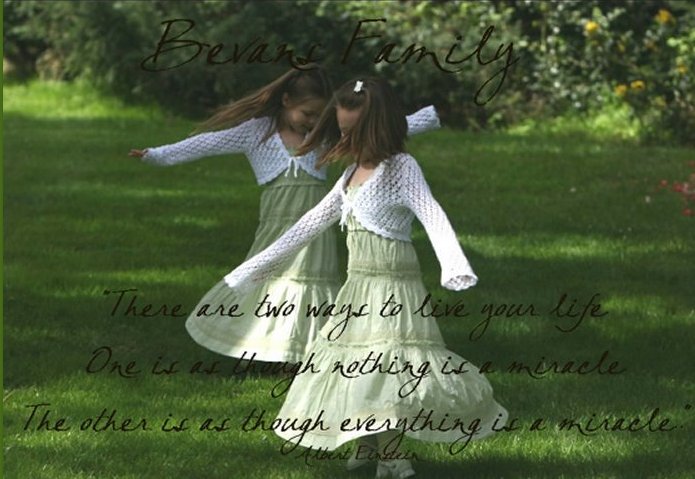
Age 0-1: Fatigue galore. The main thing I

remember is being so tired my brain wouldn't function fully. We basically had one snapshot that was taken repeatedly over the course of that year. It is the same picture. Me sleeping with the babies in a messy room.
Age 1-2: Destruction. One-year-olds remind me of

that scene in Ghostbusters with the Stay Puft Marshmallow man cheerily destroying the city. "Choose your destructor!" They're constantly exploring things, eating things, ruining things, but the whole time they're all cute and happy and you can't reasonably get mad at them. So we had two destructors that year. And one of them liked to play a constant capture-the-flag type game with the toilet brush. "I LOVE it. It's FanTAStic." (Bonus points if you know what movie that's from)
Age 2-3: I wrote the following shortly after Brooke and Janelle

turned 3. (It's lengthy, but I think it captures my experience pretty accurately):
Twins?!:
I’ve always believed that the terrible two’s can be summed up in one succinct statement: Two-year-olds are old enough to get into everything, but not smart enough to know any better. It’s comparable to having a couple of moose move in to your house, with the inevitable chaos and destruction mixed with the lack of intelligence –although a moose would probably not get spaghetti stuck in its nose when it ate.
What actually killed the cat:
It seems to me that a toddler’s mind is on a single track – curiosity. While we are familiar with the saying that curiosity killed the cat, we always assumed it was the cat’s own curiosity. Not so. It was a two-year-old’s curiosity. I’ve personally known three cats that have died this way. Perhaps not directly by the hand of a two-year-old, but I doubt that dragging the cat around the house in a headlock helped prolong its life any.
“What would happen if…” plays like a broken record so that all possible outcomes of all possible situations are experimented with. I understand that all that experimenting is part of a necessary learning process children need to go through, but that doesn’t stop me from wondering WHY the child had to wade her feet in the toilet to find out that they got wet, mom freaked out and she ended up in the tub. Can’t we just skip some of these little experiments and make assumptions about the outcomes? When you ripped the wallpaper in your bedroom the first time, why did you have to rip it two more times before you had satisfied your curiosity? These are questions I would like answered by my children. When I asked just now, the answer I got was, “I didn’t rip the wallpaper, Brooke did.” “No I didn’t! Janelle did!” “No, Brooke did.” “NO I DIDN’T, JANELLE DID!”
Finger Pointing:
With one child, there really aren’t that many people to point dirty little fingers at. My oldest child, Sophia, had no one else to blame her disastrous experiments on. Oh, she tried, but I was hard pressed to believe that her rubber ducky got into my inkpads and left little blue fingerprints on the walls. With two of them it is a different matter. If I didn’t see it, and barring any obvious evidence pointing to one or the other, it could have very well been either child. So I am left with no other choice than to punish both of them where possibly only one of them is guilty. However, I have to believe that the times are few and far between that they are not working together to cause trouble.
Whoever said twins were double trouble wasn't very good at math:
Twins undoubtedly cause far more than double trouble. Not only do they have double manpower, there are two curious minds at work. It’s true that what one doesn’t think of, the other will, and both will be willing participants. One child would not dream of trying to change her own poopy diaper, but twins think it’s a fabulous idea. One child would never be able to haul the scrapbook off the high shelf and tear apart seven pages – only two toddlers working together can manage such a feat. One child might find it amusing to get into a little Vaseline, but only twins would do it in the tent on a camping trip, all over the clothes, sleeping bages, etc., so quietly that I naively think they're sleeping in heavenly peace the whole time. One child may climb on the counters and get into the cupboards, but only twins can do it with such raw efficiency that they can share an entire bag of chocolate chips before I think to check on them.
Child-proofing:
Such incidents made me think beyond the normal child-proofing measures. I know that I can’t stop all the destruction, but I will certainly try to stop at least the destruction that I know will occur over and over again. Nap time has always been the prime time for experiments in my house. There they are, refusing to go to sleep, stuck in a room without supervision – when I put it like that, it really seems unwise to let my children go to nap at all. In fact, after the third wallpaper disaster recently, I decided I couldn’t trust them in there alone and will keep them up until they absolutely collapse from exhaustion.On more than one occasion I have heard little voices making evil plots before they fall asleep only to walk into an elaborate booby trap the next time I walk into their room. But I try, as a concerned parent, to minimize the harm they may cause by taking several precautions before I put the children down to nap. For instance, when I found that they were taking their diapers off before they fell asleep, I started duct taping them on. (Of course, that only worked until they found that although they could not get their own diaper off, by working together they could get each other’s off.) Then I began safety pinning their clothes together. (Many clothes ended up with holes in them from their efforts to get them off.) The light switch was another source of fascination, so I tried duct taping it down. With enough perseverance they were able to get the tape off, so I began unscrewing the light bulb instead. Then it was the closets. Nearly every time I put the girls down to nap, they would get into the closet and cause 15 minutes of extra work for me putting all the clothes and shoes back where they belonged. So I began to use bungee cords on the handles to try to keep the doors closed. As should be expected, however, two children can overcome bungeed closet doors (one holds them open while the other slips in the crack.) Once I went in to get them from nap and couldn’t see them anywhere. I searched the entire house and yard wondering the whole time how they could have gotten out of their room without my noticing. I finally found them both asleep inside the closet with the doors still bungeed. I think the next step has to be a hook and eye lock up near the top of the doors where they can’t reach it, even when one of them climbs on a chair and boosts the other up. If only there were a humane way to keep them absolutely contained and confined to their beds. What I need is a child kennel. I thought of using the bungee cords to hold them down – not tight or anything, just to keep them on the bed. Did I actually do it though? No, I don't actually have the guts and they'd outsmart it anyway.
Discipline:
I often catch myself being somewhat hypocritical when I discipline my children. I’m always saying something that I know if another adult were around, they would laugh at the stupid thing I just said. For instance, I’ll yell at my kids to stop yelling. Or tell them that they won’t get a treat until after they eat their dinner all gone, while I opted to forgo the casserole and eat ice cream instead. I’ve often lectured the importance of eating well-balanced, nutritious meals on a day that I ate chips and nacho cheese for breakfast, lunch and dinner. Or I’ll tell them to go outside and play because they need their exercise while I sit on the couch and read with a pack of M&M’s I’m trying to hide from them. One of these days my kids will call me on it and I’ll know that is the day they will have surpassed me and I’ll be useless as a mother to them. Until then, I’ll probably continue to eat ice cream for dinner when my casserole looks unappetizing.
Communication:
People have often asked me if it’s true that twins have secret languages. In my experience, they do. It’s not Klingon or anything like that, they use English words, but they attribute different meanings to familiar words, or leave out or change certain words of a sentence, and while it makes no sense to an adult, it makes perfect sense to each other. Trying to listen to them and understand their evil plotting during nap time is entirely in vain. I don’t realize that when I hear, “Put the cookie to the pink shoes,” one child is asking the other to take off her diaper and put a chunk of poop into her good dress shoes. It took me a while to decode the word “cookie” as “poop”. I used to hear them say things like “Don’t eat the cookie,” “The cookie is in my bum,” or “Brooke put the cookie in the bathtub.” Now I understand what they meant and it frightens me to think what they might have done when I thought they were just talking about an imaginary cookie.
Beyond the “secret language” barrier, even when my children are trying to communicate with me I find it difficult at times to understand them. Limited vocabularies, bad pronunciations and misuse of words compound the task. Janelle came running to me once in a rather distressed voice saying, “Brooke’s stuck in Cinderella’s bum!” I had a time figuring out what in the world that could have meant until Brooke walked in a minute later with a Cinderella Barbie-type doll with her dress caught where the leg attaches to the hip. What am I supposed to make of, “I want an apple-peach” or “Don’t braid my hair in a train”?
Mispronunciations are an abundant source of amusement as well. Every time I hear Janelle talk about her “bo-gers” (which is more frequent than you might expect) I have to smile. Names always seem to come out a little skewed as well. My girls have always had fun taking a perfectly nice name and making it their own. Poor Brock became Jrock, Wyatt became Quiet (and Snow Wyatt once), and Lucia was called Blucia for months.
It must be instinctive to think that effective communication positively correlates with volume. Like the way we talk to foreigners. As if the only reason they don’t understand English is because we haven’t been speaking it loud enough. Two-year-olds have the same misconception (perhaps we never really grew out of it). My children have never been soft-spoken creatures anyway, so when they see that I’m not understanding what “up-slide-out” or “cheesy-toes” mean, they can really raise the roof.
Although the communication barrier makes it harder to understand them, it greatly adds to the amusement of living with toddlers. It’s a very important counterbalance when you think about it. I would've checked in to the loony bin a long time ago if it weren't for the lighthearted moments. Like when Sophie very sweetly told me she loves me more than she loves Satan. Or when Brooke was snuggling with me, pinching my elbow like she loves to do, and presumably for the first time noticed hair on my arm. She asked me, "Mom, why do you have grass on your arm?" I don't know. I guess I'm a freak of nature.
Potty Training:
As if all the trouble two-year-olds get into isn’t enough to keep us busy, we torture ourselves by trying to fit potty training into the same year. Why does society put this gargantuan task on us parents this year? If your child is three-years-old and you want them to go to preschool, they have to be fully potty trained first. Now, I can appreciate why a poor preschool teacher would not want to worry about dealing with 15 untrained preschoolers, but why in the world has technology not designed some sort of a super diaper that can withstand hours of wear without causing a raw tush or foul smells. Then we could potty train our children when they are fully capable of understanding the process and are less likely to play in the toilet.
I understand that one of the worst things a parent can do when trying to potty train a toddler is to stress them out about it or get upset at accidents. I don’t know the fool who made up this rule, but it was probably a man who wasn’t the one trying to get the urine out of the sofa. You take a child who has never had to pay attention to their bodily functions and put them into underwear that works like a sieve and we’re not supposed to so much as raise our pulse while we are rinsing out poopy underwear in the back yard with a hose for the fourth time in two hours. I don’t know who really is fit to be a mother of a toddler under that kind of pressure.
Bath time seems to become a whole new experience during the potty training time. Even though they have been taking baths since birth, the defecation and urination in the tub don’t seem to become much of an issue until they are supposed to be learning to control it. When Janelle pooped in the tub, I made a big deal about how that was not a good place to do that and that next time she needed to go on the toilet. Not two days later as I was getting her dressed I asked her if she had to go potty first. “No, I went potty in the bathtub.” “What!?” “Not poop, Mommy, just potty.”
Age 3-4: No relief in sight. I thought the worst was behind me when they

turned three. After all, they weren't "terrible two's" anymore. Not so. 3 yr olds are just that much more clever, efficient and manipulating. Incidentally, that was the same year I went back to school and Amber and Lydia each had the joy of taking care of them one day a week. Honestly, I thought they'd be easier.
Shortly after their 3rd birthday, just when I was starting to relax a little, I was on the computer, and in the same room as me, not 6 feet away, they were quietly

getting into paint and spreading it all over themselves. That's worth a picture post if I can get my scanner to work. (there, it worked)
To be fair though, I love 3 yr olds. It's my favorite age. There is just enough hilarity to balance out the craziness. Like the time Janelle was perfecting her color recognition and noted that her poop looked like Belle's hair and her potty looked like Belle's dress. Or when Brooke told me to draw a picture of "Wake-up Beauty." I was a little sad when they turned 4 and that year was over.
Age 4-5: Calming down.This was an easier year.

Old enough to understand choices and consequences. Easier to reason with and discipline. Still funny, too. At Thanksgiving this year, Brooke said she was thankful for her head (aren't we all?) and Janelle said she was thankful for her mom...so she didn't have to wipe herself.
Age 5-6: Holding my breath. This was the year they started sch

ool, and unlike Sophie who I knew would breeze through with nary a behavior problem, I was a little nervous about my little twin angels. We thought it would be to their advantage to keep them in the same class, and it did go a long way to helping them adjust to all the changes. The flip side to that, however, is that when they're together, they're in their comfort zone so much so that they don't have the normal inhibitions about misbehaving. Don't get me wrong, they weren't demons (or so their teacher didn't say so), but they were just a little more likely to be slow to follow directions, things like that. The same way a kid will misbehave for their mother, but behaves perfectly for a sitter. My favorite moment from this year: when Brooke asked me what letter made the "e" sound in "bead". "Like a bead on a necklace?" I asked. "No, like in 'One time I beed bad in school." Next year we're separating them.